
START HERE
What are the modules sharing?
Think about coolant temperature. The engine computer needs it to manage the engine; the instrument cluster needs it for the gauge. In the video's example, the engine computer shares the information over the network instead of each module needing its own sensor.
Now add more modules and separate networks. A gateway lets those networks exchange information. The diagnostic connector, or DLC, may lead to that gateway rather than directly to the branch you're interested in.
That's why we follow the path first. A successful scan-tool conversation tells us something about that path. It doesn't tell us that every other branch is working.
GoTech Tips
CORE GOTECH TIP · FROM THIS LESSON
Follow the path that answered.
A module answered. Good—now point to the path it used. We still need to look at the branch involved in the complaint.
Compare the paths →More GoTech tips · 2
GOTECH TIP · FROM THIS LESSON
Narrow the diagram to the actual complaint and equipment.
The Escalade story removes irrelevant option branches before narrowing the search.
Shrink the Escalade diagram using the actual complaint and options →GOTECH TIP · FROM THIS LESSON
Use the older case to ask a better question.
The later Acadia needs its own network layout; the familiar warning is not enough.
Use experience to ask a better question, not skip the diagram →CONCEPTUAL EXAMPLE — NOT A VEHICLE WIRING DIAGRAM
One responding module does not clear every branch
Lines show communication relationships, not conductors. The response establishes enough operation for that exchange—not complete health of every item on the path.
Read the diagram in words
A scan tool connects through the DLC and a gateway to two conceptual branches. Module A responds over Path A, shown with solid lines. Path B to Module B is dashed: its condition is not established by that response.
PRACTICE IT
Try one before you move on
Make your choice, then compare it with the explanation.
0 of 3 questions compared
Read the full explanation
Two responses do not clear every gateway function or every relationship to B. That conclusion narrows the problem farther than the observation supports.
Yes. Apply the solid-path idea to both observed exchanges. Adding another responding branch still does not establish the unobserved path to B or identify why B did not respond.
A shared access point does not make the downstream branches equivalent. The result does not distinguish B’s branch, its module or other applicable conditions.
FROM THE ORIGINAL LESSON
Find the network involved in the complaint
Where should CAN bus diagnosis start?
Start with the modules involved in the complaint. Find their communication network and physical connections on the diagram, then identify the protocol before choosing a test. A whole-vehicle diagram includes branches that may have nothing to do with the fault.
Check your thinking
Name the communication question first: which module needs to talk to which other part of the system?
Why can a scan tool communicate while another network has a fault?
In the gateway arrangement shown here, the diagnostic connector reaches the gateway through its own branch. A good result there does not clear the downstream networks. A module may still answer the scan tool through one path while its communication with other modules is affected.
Check your thinking
What did the reported DLC reading establish about its own location? What did it leave unknown about the affected branch?
Escalade: narrow the diagram to the noncommunicating module
The Escalade’s fuel-pump driver module still would not communicate after replacement. With power and ground checks reported, GoTech followed its communication wiring and excluded diesel-option branches that did not apply. That smaller search area led to reported rodent damage.
Check your thinking
Which facts let him cross parts of the diagram out, and which facts would be unsafe to assume on another vehicle?
Acadia: connect the warning light to the no-start
On the 2013 Acadia, intermittent no-start, interrupted interior lights and a blank dash accompanied an object-detection warning. The network diagram connected the low-speed communication problem to the key-reading dependency. GoTech reports corrosion at an object-detection module and a return of operation during isolation.
Check your thinking
Why did the object-detection warning deserve a place in the explanation of the no-start?
Can you use the same diagnosis on a newer vehicle?
The later Acadia had a similar object-detection warning but a different network arrangement. Object detection and immobilizer functions were separated differently, so the older vehicle’s no-start explanation did not carry over. Check the applicable diagram before reusing a familiar diagnosis.
Check your thinking
What would need to match before you could reuse the older case's reasoning?
Keep this example in scope The Escalade and Acadia stories are the instructor's reported cases. Their exact diagrams, options, connector details and lasting repair outcomes are not independently verified here. The companion teaches the reasoning without prescribing module disconnection or a replacement.
PUT IT TO WORK
Two more questions
Use the case details above. Pick an answer, then check the reasoning.
Read the full explanation
Persistence made it a useful lead. The network relationship and further investigation still mattered.
The source revisits that separation after considering the shared communication problem and symptom pattern.
Yes. Its value came from the case's symptom pattern and network relationship, not from the warning text alone.
Read the full explanation
Yes. Experience suggests a question; the applicable diagram determines whether the old relationship still holds.
That carries an unverified architecture into the interpretation. The later Acadia example changes the relevant relationships.
Different network separation can change the consequences. The symptom difference alone does not establish the layout or exclude a branch.
FROM THE ORIGINAL LESSON
Watch the original GoTech video
The original lesson demonstrates this reasoning through the instructor's Escalade and Acadia network cases. Each story keeps its own equipment and communication relationships.
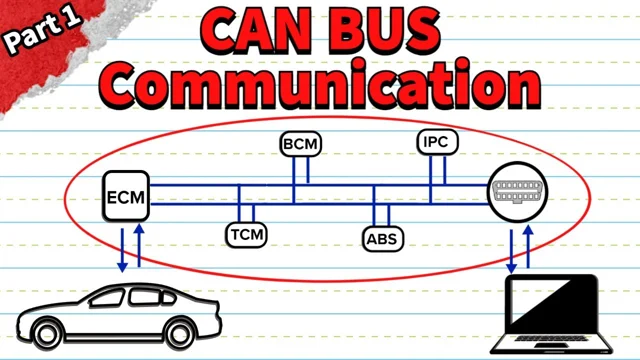
Video loads only when you choose to play.
YouTube connects only when you choose to play.
Watch on YouTube ↗ · CAN Bus Communication Explained (Part 1)
Watch the full video, or use the timestamp links beside each explanation to jump to that moment.
KEEP THIS
A module answered. Follow the path it used, then check the branch involved in the complaint.
Explain it back · optional
This note stays in this open page. It is not sent, graded or saved; copy it before leaving if you want to keep it.
Review your explanation
- Did I name the source example and the relevant conditions?
- Did I separate the observation from my interpretation?
- Did I say what the evidence still does not establish?
Study sheet · read or print
GOTECH · CAN PART 1 OF 3 · STUDY SHEET
CAN bus communication explained
A module answered. Good—now follow the path it used. We still need to look at the branch involved in the complaint.
Three GoTech tips
- Follow the path that answered. Find the scan connection, gateway and responding module on the diagram. Keep that result attached to that path.
- Make the diagram smaller. Start with the modules involved in the complaint. Check the vehicle's equipment so unrelated branches don't send you the wrong way.
- Check the layout again on the next vehicle. A familiar warning doesn't guarantee the same network or the same cause.
The Escalade example
- What GoTech reports
- The fuel-pump driver module still would not communicate after replacement. Power and ground checks were reported.
- What narrowed the search
- Following the applicable communication wiring—and excluding diesel-option branches—led to reported rodent damage.
What this does not establish
A scan response does not establish that every branch is healthy. This reported case does not independently verify your vehicle's wiring, connector details or a lasting repair.
Your working notes
Which modules answer, and which do not?
Which path or branch would you identify next?
Go back to the source
Lesson: https://gotech.com/learn/can-bus/communication-and-context/
Written from GoTech's original video; these notes paraphrase the explanation. Technician review and independent verification of source diagrams remain pending.
Next: see what the wiring changes
In Part 2, we'll look at what a disconnection changes besides the module you unplugged.
Mark studied & continue →Saves your place on this device. Your answers and written note are not saved.
Source, scope & review
GoTech’s written companion to the original demonstration. Source moments support the case observations; the learning prompts are GoTech editorial guidance.
The Escalade and Acadia stories are the instructor's reported cases. Their exact diagrams, options, connector details and lasting repair outcomes are not independently verified here. The companion teaches the reasoning without prescribing module disconnection or a replacement.
Timestamp links identify supporting passages. They do not independently verify every source diagram or establish a procedure for another vehicle.
Additional source moments
- CAN Bus Wiring and Protocol Explained (Part 2) · 00:25–03:40
- CAN Bus Wiring and Protocol Explained (Part 2) · 10:30–12:55
- CAN Bus Wiring and Protocol Explained (Part 2) · 17:10–20:50
- CAN Bus Wiring and Protocol Explained (Part 2) · 26:00–28:20
- CAN Bus Wiring and Protocol Explained (Part 2) · 35:15–37:25
- CAN Bus Troubleshooting and Diagnosis Explained (Part 3) · 18:05–19:05
- CAN Bus Troubleshooting and Diagnosis Explained (Part 3) · 20:15–22:00
- CAN Bus Troubleshooting and Diagnosis Explained (Part 3) · 08:20–15:25
- CAN Bus Troubleshooting and Diagnosis Explained (Part 3) · 24:20–27:35