
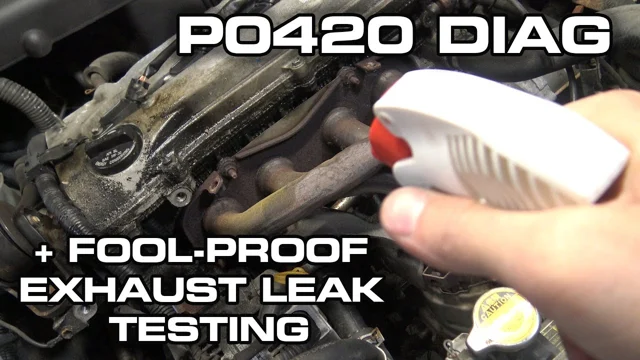
Video loads only when you choose to play.
Article contents
Locate the suspect catalytic converter
Locate the suspect catalytic converter to be tested – ↗ 0:50
Check for exhaust leaks
Visually inspect for cracked or rusted-through components. With the engine cold, start the vehicle and listen for leaks—pay attention to connections and flex pipes – ↗ 1:44
If a hard-to-find leak is present, pinpoint it using soapy water and a shop vac – ↗ 2:42
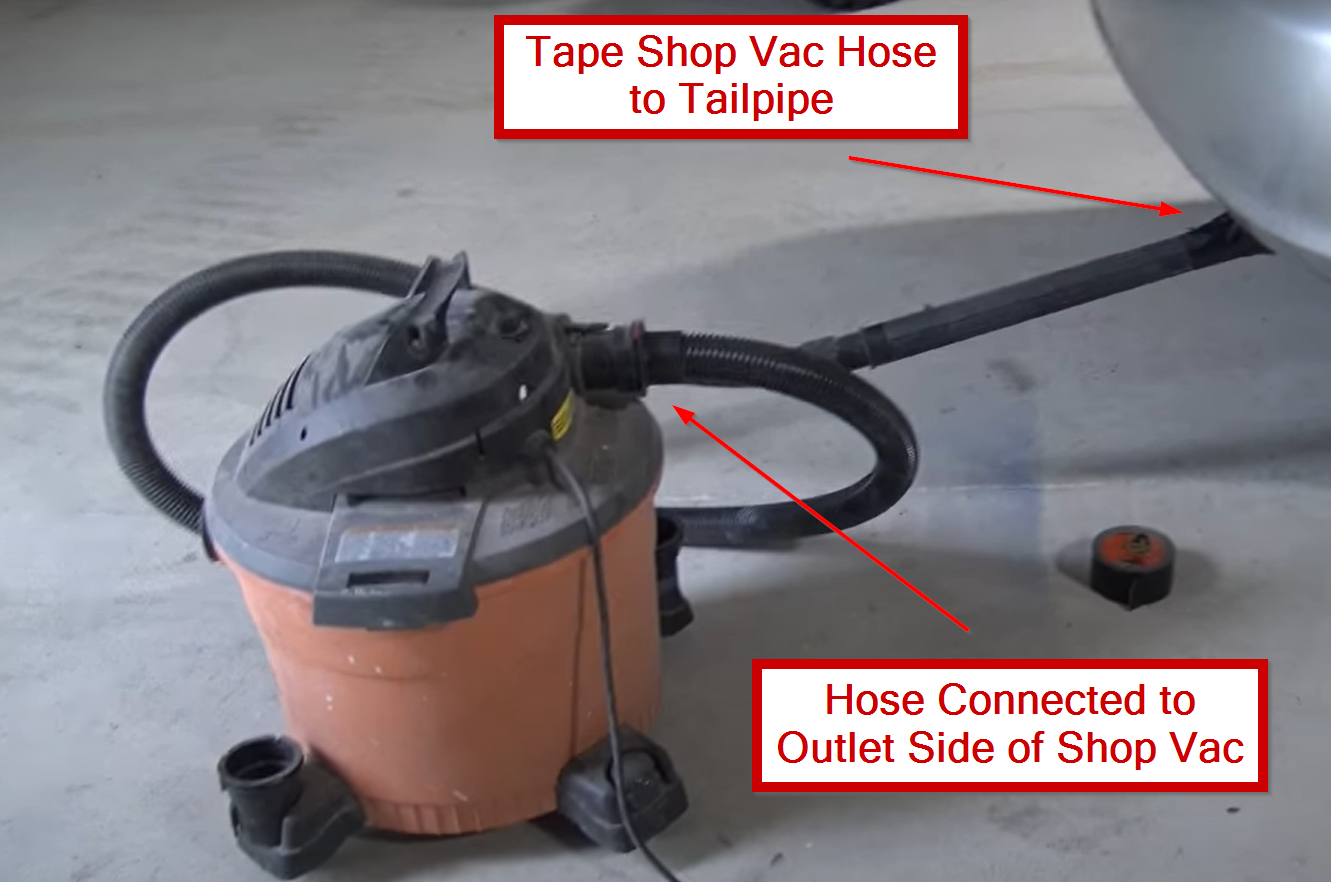 Enlarge illustration 1
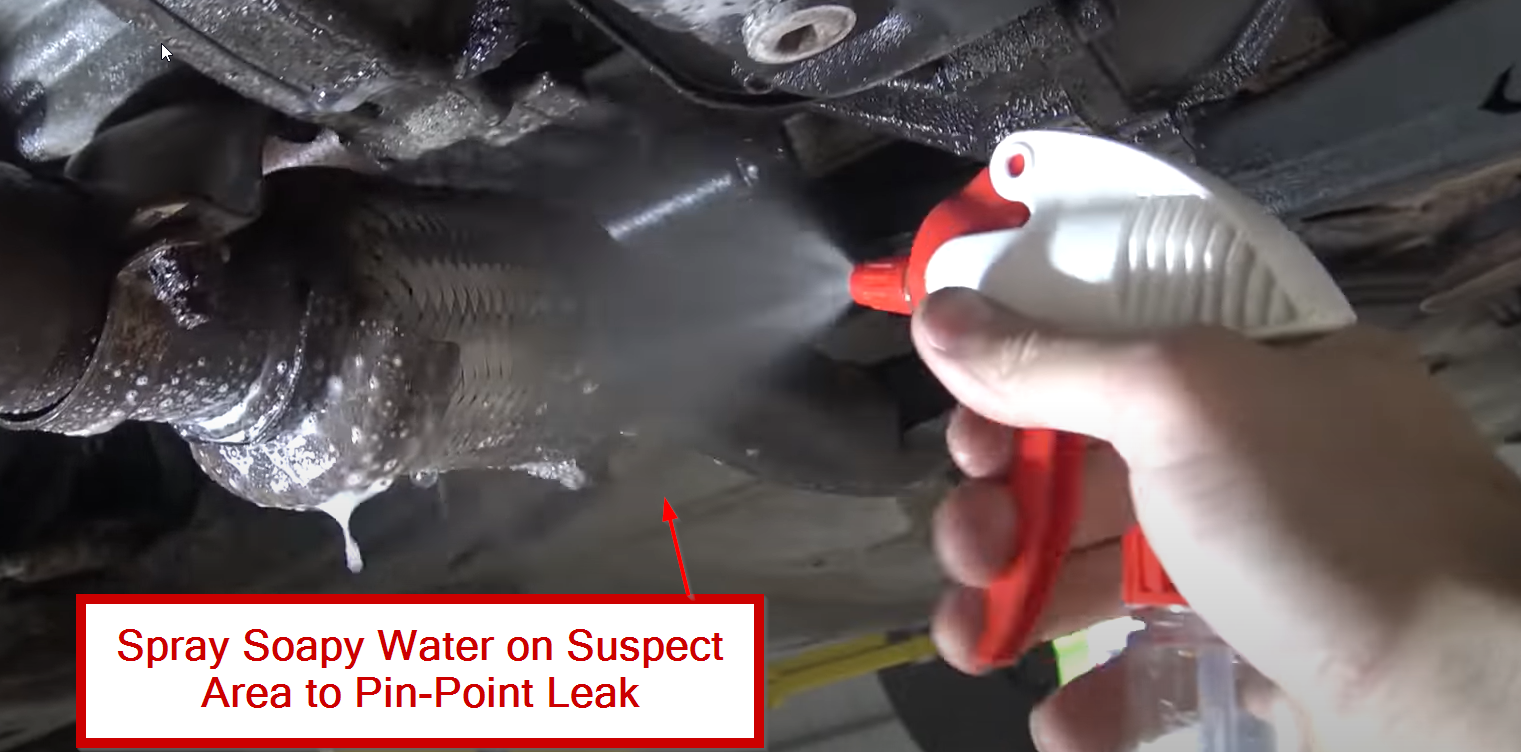 Enlarge illustration 2
Warm up the converter
Bring the engine to operating temperature so the catalytic converter is hot enough to function properly – ↗ 5:04
Graph O₂ sensors
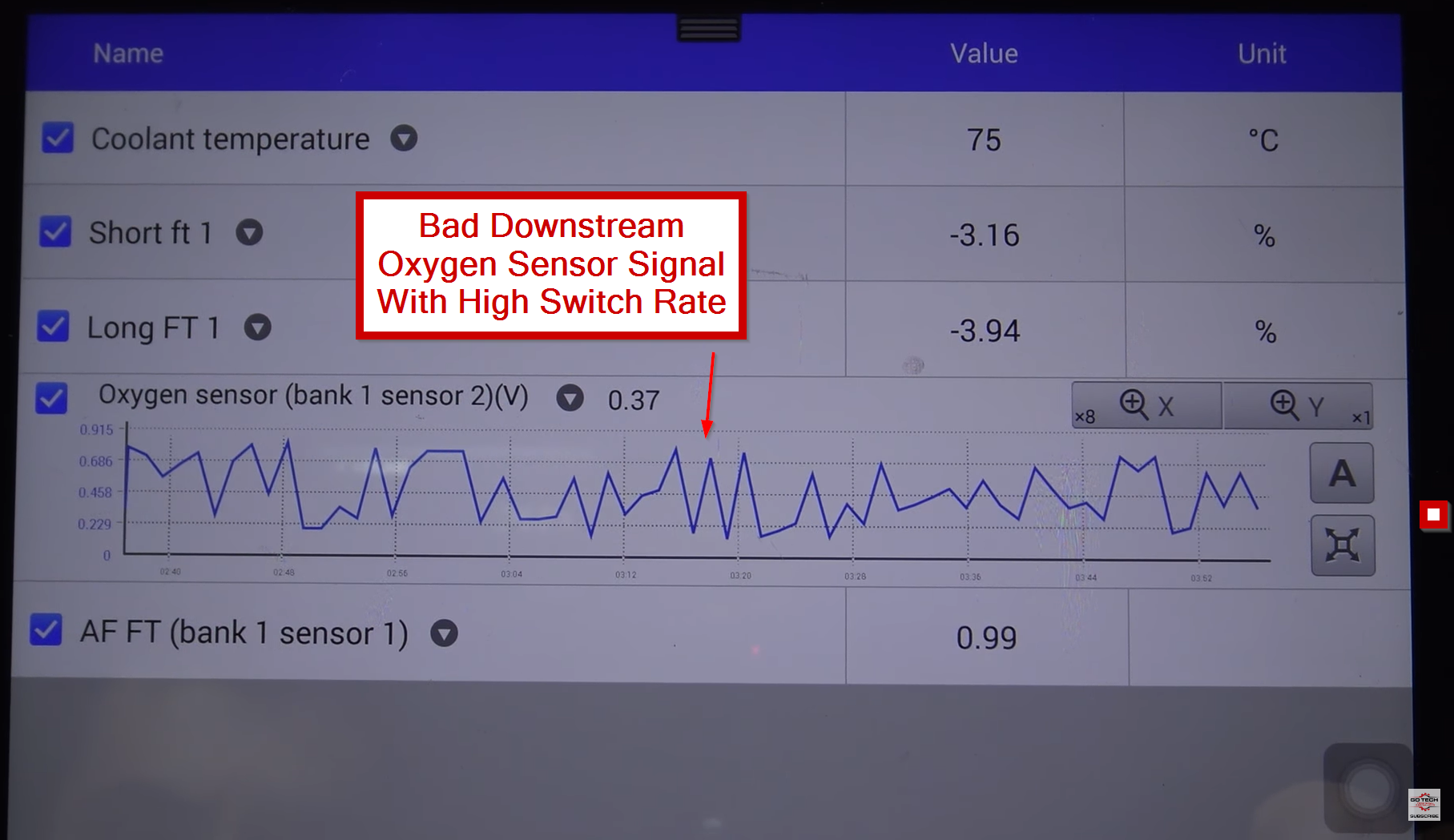
With a scan tool or lab scope, graph the upstream and downstream O₂ (or A/F) sensor signals – ↗ 5:28
Interpret waveforms
Monitor signals at idle and ~2000 rpm. A healthy converter shows a relatively steady downstream O₂ trace; a failed converter shows downstream activity mirroring the upstream – ↗ 5:31
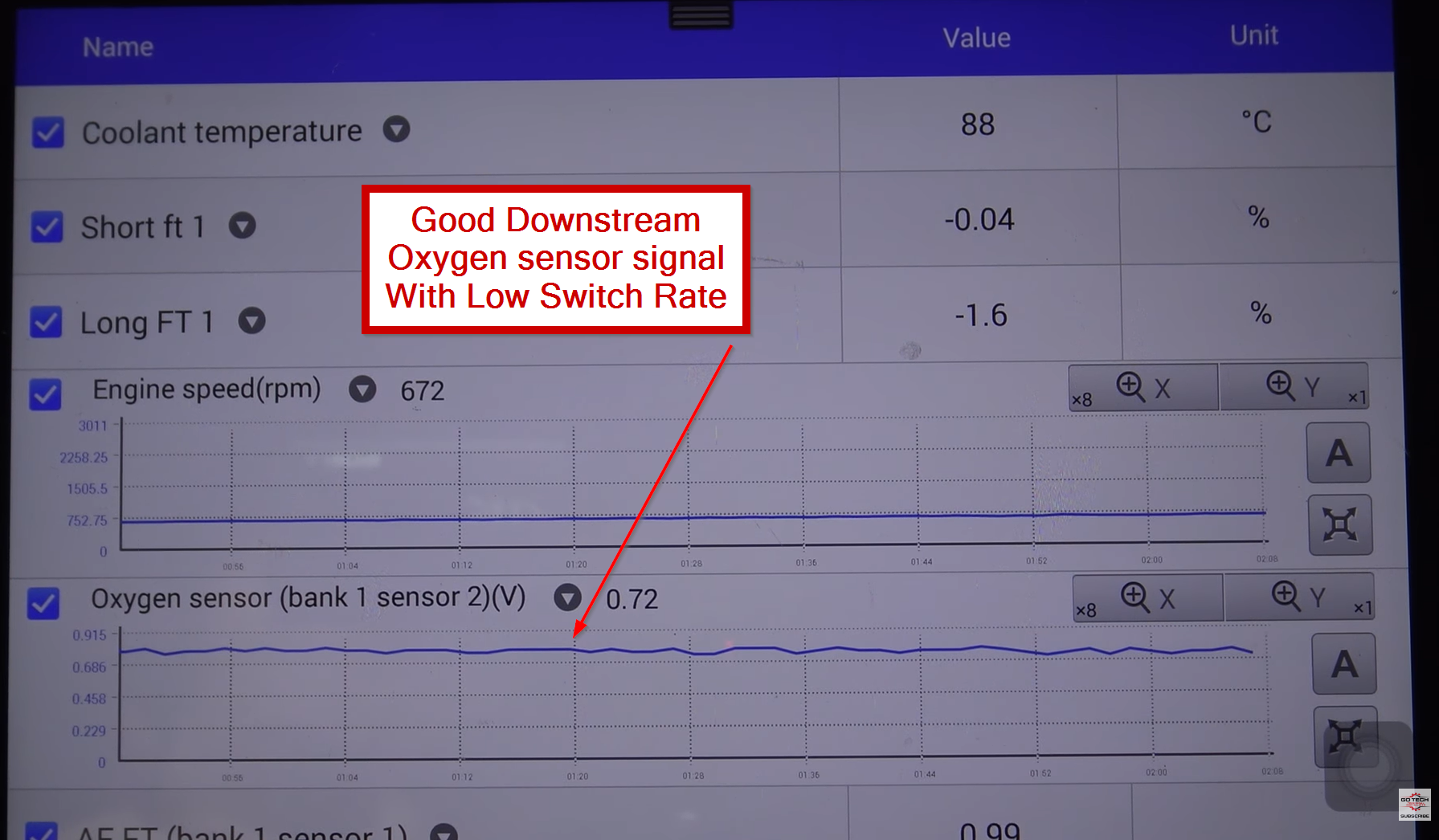 Enlarge illustration 3
 Enlarge illustration 4
Confirm with O₂ sensor test
Test the O₂ sensor to confirm results – ↗ 6:15
Replace and confirm
Source and limits
Original GoTech article, 2023-02-22. Illustrations retain their source descriptions; their technical meaning has not been independently reviewed. Videos and articles remain separate evidence.
Existing tool links may earn GoTech a commission. Commercial descriptions remain attributed to the original article.
Article provenance
Source mdx-cab7f18d182f950aa8e5
SHA-256 bb6b4f99c260896ecc9891fc8556c0eba2441cfdf2af88f0063fd8fbbfb8bc5e
Keep the evidence in view.
Ask currently covers reviewed CAN and wiring concepts. Coverage for this article’s topic may be limited.
See what Ask covers · Explore learning paths