
Which check do you need?
These checks cover normally open, electrically controlled vent valves. Save the codes and freeze-frame data, then choose the failed behavior.
Valve does not respond / circuit codeCheck the command, power and control circuit
- Command the valve. Use a scan tool that supports the vehicle’s EVAP vent output control. Follow its key/engine conditions and cycle open/closed while checking for actuation.
- No response? Inspect the connector and wiring for damage or corrosion. Follow the vehicle’s circuit chart to test the power feed, connector and control wire under the specified conditions. A missing command or wiring fault can look like a failed valve.
- It responds? Continue to the sealing check. Movement alone does not prove it stops flow.
Testing with a multimeter: use the correct pinout and the specified voltage/resistance checks. An intact coil cannot prove the valve seals. There is no single resistance specification for all vent solenoids, and a basic code reader may not command the valve.
Do not guess at terminals or apply battery power to a connected control circuit. Use fused test leads only where the vehicle’s diagnostic procedure calls for them.
EVAP leak / valve clicks but may not sealCompare actual flow with the open and closed commands
Use an EVAP-rated smoke/flow tester, a supported bidirectional scan tool and the vehicle’s leak-test procedure. Work away from ignition sources; follow the tester’s gas supply and vehicle pressure limits. Do not use unrestricted shop air.
- Establish the test boundary. Check the purge side, filler seal and test connection. Confirm smoke reaches the area being tested.
- Check the open state. On the normally open purge/seal systems shown in the videos, smoke leaving the vent is expected while it is open.
- Command closed and inspect. Persistent smoke from that vent outlet points to a valve that has not closed or sealed. Verify the electrical command before condemning it. Smoke elsewhere leads to that hose, seal or connection.
- Restore the open state. Release test pressure as directed before judging reopening. In the Traverse demonstration, trapped test pressure can hold the valve shut after an open command.
Full smoke-test setup and result checks → · Smoke test passes but P0442 returns? →
Hard to fill / suspected blocked ventSeparate the valve from the hose, filter and canister
With the vent in its normal open state, inspect the fresh-air hose and filter for dirt, damage or kinks. Follow the vehicle’s restriction test to isolate each section. Replacing the valve will not clear a blocked filter or hose.
If tank-pressure data does not respond as expected, verify the pressure sensor and its circuit before trusting that reading. GoTech’s Sierra P0446 case ended with a pressure-sensor repair, not a vent valve.
Follow the hard-to-fill diagnosis →
See the P0446 pressure-feedback case →
Check fuel-tank pressure feedback →
Valve failure already confirmed? Check the supported LaCrosse OE part and repair.
Where is the vent valve?
The vent solenoid controls the canister’s fresh-air path. On the purge/seal layouts shown here it is normally open and closes for leak testing, usually at or near the canister underneath the vehicle. Confirm the location for your vehicle before removing parts.
Vent valve vs. purge valve vs. ESIM
The vent valve controls the fresh-air side. The purge valve controls the path to the engine’s intake vacuum and is normally closed on these layouts. An ESIM uses a different passive monitoring arrangement; this electrical vent-valve test is not its test.
ONE SUPPORTED OE APPLICATION
2012 Buick LaCrosse AWD · 3.6L LFX
Use this option after testing isolates the vent valve. Confirm the VIN and current part supersession with the seller before ordering.
GM GENUINE PARTS · OE
Vent solenoid 85123399
GM’s catalog identifies this as an OE vapor-canister vent solenoid and lists the 2012 LaCrosse. Confirm the connector and supplied seals with the seller.
Check the OE part with GM →P0442 returns, but the pressure smoke test passes
GM bulletin PI0979 includes the 2012–2013 LaCrosse: a vent valve can seal under positive pressure yet leak under vacuum, sometimes intermittently or in colder conditions.
After the bulletin’s preliminary leak checks, its purge-and-seal test monitors tank-pressure feedback for vacuum decay. Follow that procedure and its prerequisites before replacing the valve. If vacuum does not develop, it directs diagnosis to the purge valve.
Read GM PI0979 and the vacuum-test sequence →
The bulletin’s original part number is 22740537. Folsom Chevrolet’s current parts catalog lists it as superseded by 85123399. The bulletin is not a blanket instruction to replace the canister.
Plan the LaCrosse replacement
Check access before starting. The 2012 LaCrosse AWD 3.6L service procedure requires fuel-tank removal, then canister removal, to service this valve. Plan this as a fuel-system workshop job with the full vehicle procedure, suitable lifting and tank-support equipment.
Access and service instructions
- Remove the tank using its service procedure. Follow the fuel-pressure, fuel-handling, electrical and support precautions before disconnecting it. Read the full fuel-tank procedure before starting. The valve and canister links below cover the subsequent steps; this is an access summary, not the complete tank-removal instruction.
- Remove the canister. Disconnect the two EVAP quick-connect hoses and electrical connector, then release the retaining tab as shown in the canister procedure.
- Service the valve and reassemble. With the canister removed and valve connector disconnected, use the valve removal/installation illustration. Inspect the connector, port and sealing surfaces, then follow the vehicle’s reassembly instructions.
The cited valve page does not specify a rotation angle, seal lubricant or valve torque. Do not transfer instructions from a different canister design.
Verify the repair
- Restore the system. Secure lines and connectors, remove test plugs and return the vent path to its normal configuration.
- Repeat the test that failed. Recheck electrical operation, the leak or restricted flow. A pressure-test pass does not resolve the LaCrosse vacuum-leak concern by itself.
- Confirm monitor results. Run the applicable service-bay test or vehicle-specific confirmation conditions and rescan. Record an incomplete monitor as incomplete; clearing codes alone does not prove the repair.
If it still fails, return to the failed check before buying another component.
Watch the vent-valve explanation
Start at 7:30 for location and operation or 14:00 for the open/closed demonstration. The training uses a 2010 Escape and a separate GM demonstration rig, not the LaCrosse repair above.
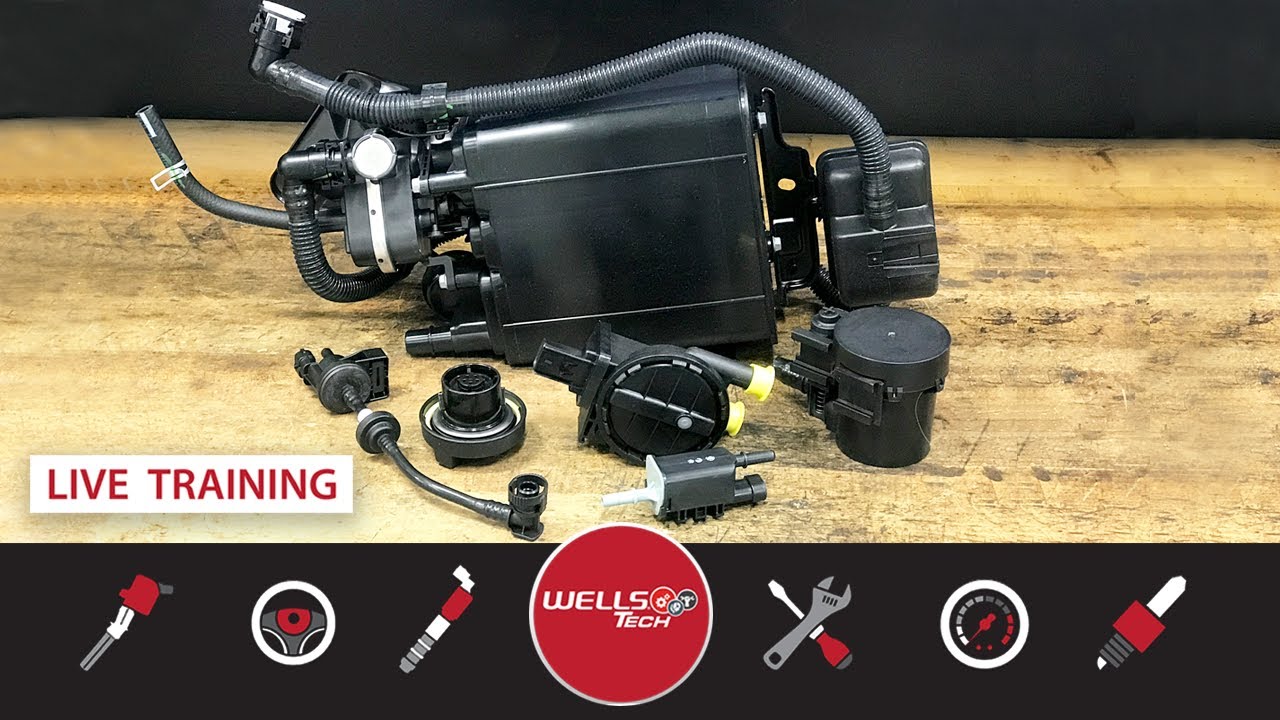
Video loads only when you choose to play.
Sources and application limits
GoTech organized these tests from the original demonstrations and the vehicle-specific material below. The order, preparation notes and summaries are editorial guidance; the source videos do not demonstrate this LaCrosse replacement.
- Original EVAP training, 7:30–10:00 and 14:00–15:00: purge/seal vent location and operation. 2011 Traverse smoke demonstration, 7:00–8:30: command, pressure response and reopening limitation.
- GM official current OE catalog: part identity and LaCrosse application checked November 4, 2026. The public fitment table does not resolve engine/drivetrain or VIN differences; catalog coverage still requires VIN confirmation.
- Folsom Chevrolet dealer catalog: 22740537 → 85123399 supersession; not independently shown on the manufacturer-hosted page.
- 2012 LaCrosse AWD 3.6L P0449 and vent-valve replacement: GM service instructions reproduced in a public manual mirror.
- GM PI0979, May 2013, hosted by NHTSA: vacuum-only leak concern for its listed models. Consult the complete bulletin and referenced preliminary diagnostics.
The general guide does not establish universal pinouts, resistance, pressure limits or fitment. Use the applicable service procedure for a different vehicle.
Did this help you move forward?
Optional. No written response is collected.