
P0446 does not identify a failed vent valve
In this 2005 GMC Sierra 5.3L case, the technician explains P0446 as a restricted or blocked vent-path check. The code led to a vent-solenoid estimate elsewhere, but the diagnosis shown here follows the fuel-tank pressure reading before selecting a repair.
Did this help you move forward?
Optional. No written response is collected.
Follow the evidence, not the part name
This is a reading of the demonstrated Sierra case. Each observation narrows a question; the final functional response is separate from a completed emissions monitor.
| Source observation | What it suggests | Evidence that follows |
|---|---|---|
| Reading stays fixed despite the reported release of vacuum. | The pressure feedback may not represent the system. This alone does not identify the sensor. | Compare the signal measurement with scan-tool data. |
| Direct signal and scan-tool readings reportedly agree. | The display agrees with the measured signal; a simple display discrepancy is less likely. | The source continues the sensing-circuit diagnosis. |
| After sensor replacement, the reported reading follows vacuum and release. | The functional recheck addresses the original mismatch. | A later completed emissions monitor is not documented. |
Does the pressure reading follow the system?
The scan tool reports pressure while the vent is commanded open. In the demonstration, removing the fuel cap does not change that reading. A later purge/seal check produces a reported release of vacuum, yet the pressure reading still stays fixed. That mismatch directs the technician toward the sensing circuit; it does not, by itself, isolate a failed sensor.
Separate the signal from the scan-tool display
In the longer case, the technician compares a direct sensor-signal measurement with scan-tool data. He reports that the two agree. This adds a circuit-level check to the earlier pressure-response clue; this companion does not reproduce connector pinouts or voltage specifications.
What was checked after the repair?
After replacing the pressure sensor, the technician repeats the purge/seal check. He reports a reading that changes as vacuum develops and returns toward atmospheric when the cap is released. This is the demonstrated functional recheck; it does not document completion of a later drive-cycle emissions monitor.
The quick clip raises a question
The short shows the same diagnostic clue: a pressure reading that remains fixed after the cap is released. The presenter also leaves a wiring fault open as a possibility. The clip ends before the repair and retest, so it is an entry clue rather than a completed diagnosis.
Watch the source in context
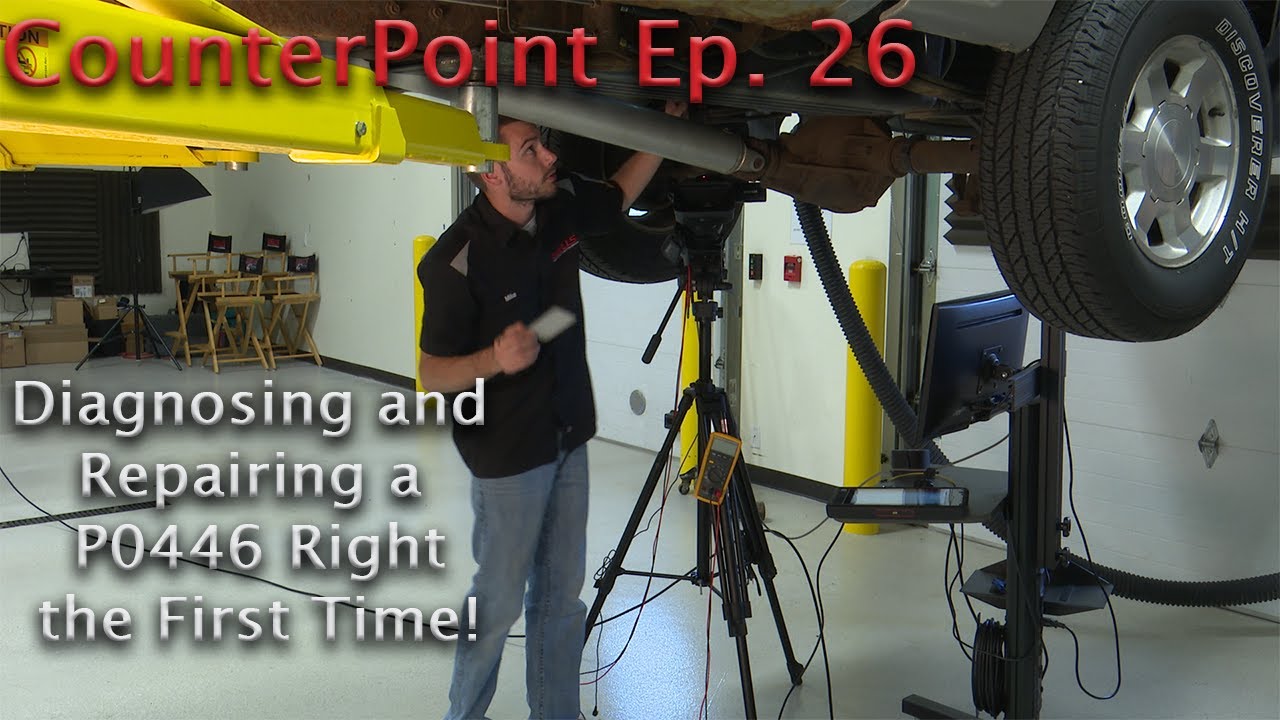
Video loads only when you choose to play.
Did this help you move forward?
Optional. No written response is collected.
Sources, review and limits
Prepared by GoTech with AI assistance. Source wording and the bounded educational interpretation were checked in two reasoning passes by the same assistant. Technician review is pending; vehicle-specific service information and visual details have not been independently verified. Original source files remain unchanged.
- P0446 does not identify a failed vent valve
- Source-reported 2005 GMC Sierra 5.3L, purge/seal EVAP. No other GM fitment inferred. Watch the source · 1:30
- Does the pressure reading follow the system?
- The Sierra demonstration. A scan-tool command and an audible response do not independently verify every component. Watch the source · 5:00
- The quick clip raises a question
- GM vehicle in the short; year, model and engine are not established. It is not identified as the Sierra in the longer video. Watch the source · 0:00
- Separate the signal from the scan-tool display
- Reported measurements on the source Sierra only. ASR numbers are not used as specifications. Watch the source · 16:30
- What was checked after the repair?
- Source-reported post-repair response, not independent repair verification or a universal P0446 remedy. Watch the source · 24:00
- Follow the evidence, not the part name
- 2005 GMC Sierra 5.3L case only. Observations and outcomes are reported by the source. Watch the source · 5:00