
Know which system you are sealing
This demonstration identifies a 2011 Chevrolet Traverse with the 3.6L engine and a purge/seal system. The presenter distinguishes EVAP test equipment from machines intended for other pressure ranges and explains why the normally vented path must be accounted for during a leak test. Use the equipment instructions and current vehicle procedure for actual settings.
Did this help you move forward?
Optional. No written response is collected.
The connection point changes what the test covers
The presenter connects on the tank side of the purge valve after considering the valve separately. That setup covers the system behind the connection; it does not establish the purge valve’s sealing performance by itself. This is why the purge resource is a separate branch of this web.
An intermittent fault may not appear in this test
The video cautions that a fault which is not active during testing can be difficult to reproduce. A smoke test with no visible leak at that moment does not establish that an intermittent EVAP concern is resolved.
A second case: check what the first test leaves out
In the separate P0455 case, the technician revisits the purge valve after testing the rear portion of the system and reports an additional leak there. The case illustrates a test-coverage gap; it does not make that vehicle’s repair the next step for the Traverse.
Use the demonstration as an evidence checklist
Record the system, the connection boundary, the components excluded and whether the concern was present. Match the actual equipment and vehicle procedure before performing a test. A known-good demonstration is not a completed repair.
Watch the source in context
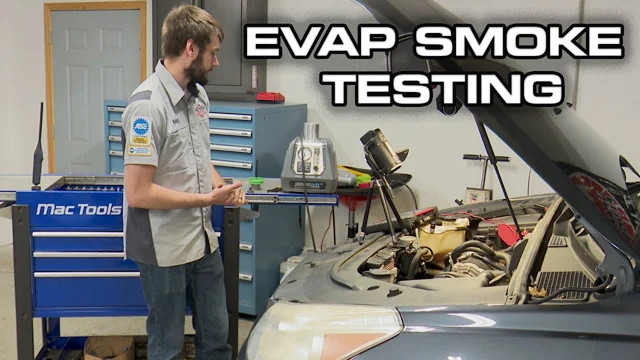
Video loads only when you choose to play.
Did this help you move forward?
Optional. No written response is collected.
Sources, review and limits
Prepared by GoTech with AI assistance. Source wording and the bounded educational interpretation were checked in two reasoning passes by the same assistant. Technician review is pending; vehicle-specific service information and visual details have not been independently verified. Original source files remain unchanged.
- Know which system you are sealing
- Source-reported Traverse demonstration. No ASR-derived pressure limit, jumper method or universal fitment. Watch the source · 1:00
- The connection point changes what the test covers
- The demonstrated connection and its coverage; not a universal connection instruction. Watch the source · 4:15
- An intermittent fault may not appear in this test
- Qualitative source explanation. No percentage success claim or diagnostic threshold carried forward. Watch the source · 11:43
- A second case: check what the first test leaves out
- Separate case; no shared fitment, numeric leak-size inference or repair transfer. Watch the source · 17:00
About older links to this guide
This guide has been rewritten around the available source evidence. An older section link may land here; use “In this guide” above to find the revised explanation. Original source files are retained in GoTech’s review history.