
What brought you here?
Already have findings? Choose the next step →
Do not road-test a truck with unsafe looseness, severe vibration or abnormal braking. An ABS light alone does not identify a bad bearing; read the fault and test the affected circuit.
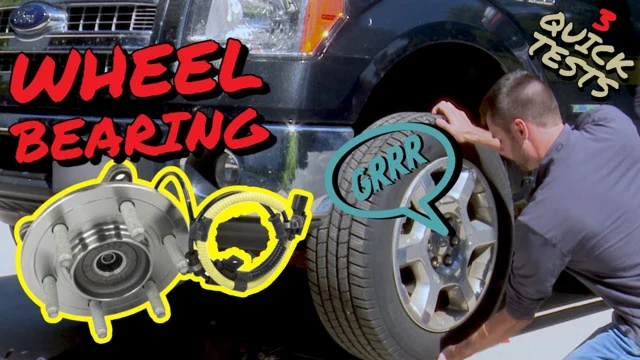
Video loads only when you choose to play.
Article contents
Faulty wheel bearing symptoms
Noise: Clicking, rumbling, groaning, grinding noise
Vibration, wobble, or shimmy
Abnormal tire wear
ABS light
Identifying a wheel bearing noise
↗ 0:26Drive the vehicle to confirm a wheel bearing noise is heard, make sure to test drive at both slow speeds and highway speeds
Check for a constant growling or groaning type sound that usually gets louder the faster the vehicles speed
Pinpoint noisy wheel bearing location
↗ 2:05Difficulty: 1/5
Time required: 5 minutes
Tools Required: None
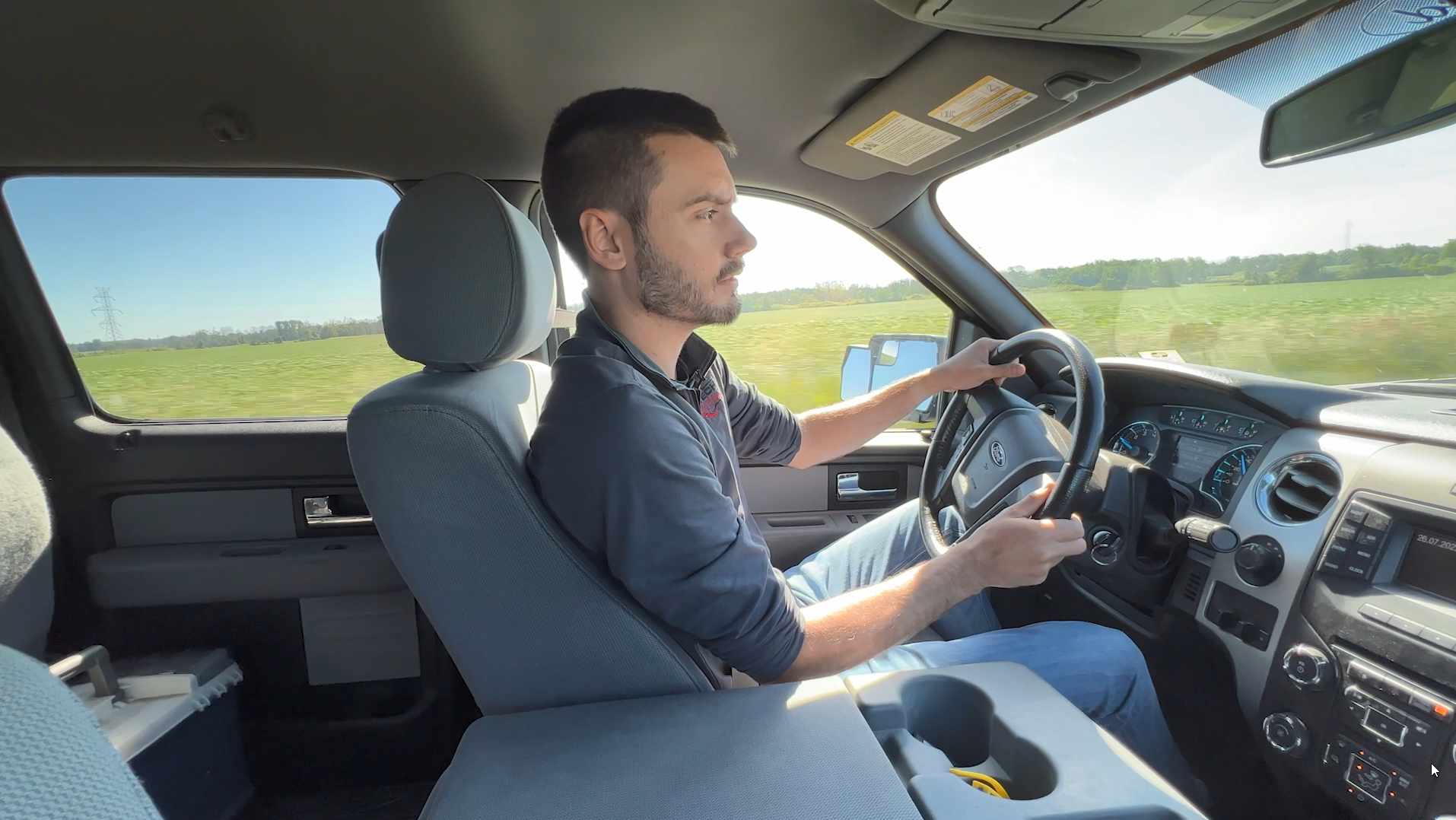
Locate a smooth road with minimal traffic and remove or turn off noises such as the blower motor or radio
Bring the vehicle up to the speed the noise is most noticeable
Slightly turn the wheel back and forth, enough to shift the weight of the vehicle from side to side
Listen for the noise to change and note which direction the noise sounds the loudest
 Enlarge illustration 1
Checking wheel bearing for play or looseness
↗ 4:15Difficulty: 1/5
Time required: 15 minutes
Tools Required: Floor jack, Jack Stands
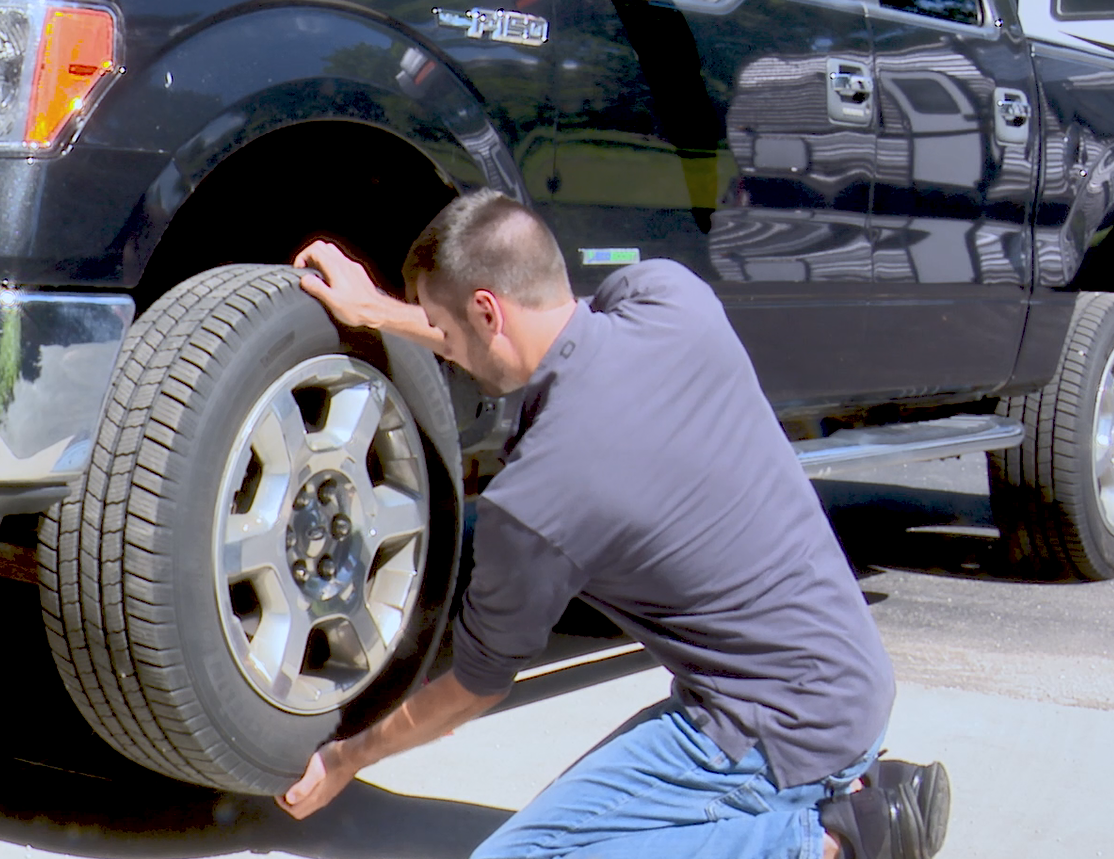
Safely lift vehicle of the ground, if using a floor jack make sure to secure with jack stands!
 Enlarge illustration 2
With the truck safely supported, rock the tire at 12 and 6 o’clock while observing where movement occurs. Confirm whether it is at the hub bearing or a suspension joint. Movement at a ball joint or control-arm bushing calls for that diagnosis, not an automatic hub purchase.
 Enlarge illustration 3
Free spin wheel bearing to confirm noise
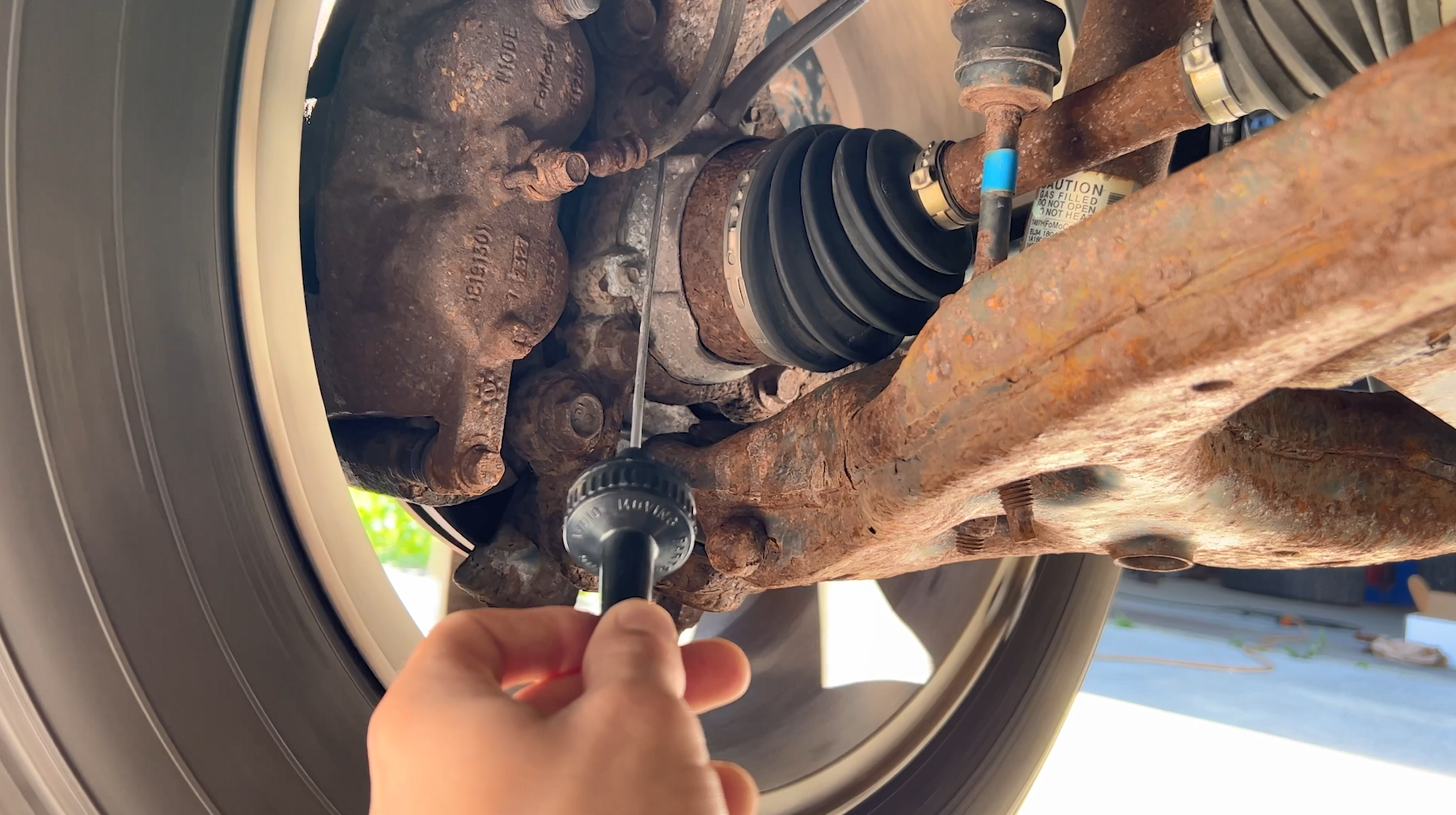
This video check uses engine vacuum to release the IWE on the setup shown. Match the truck’s lifting and test setup first; use secure stands, ventilate exhaust, keep hands and the stethoscope clear of moving parts, and never power the raised wheels in gear.
↗ 5:49Difficulty: 1/5
Time required: 15 minutes
Tools Required: Floor jack, Jack Stands, Stethoscope
With vehicle in park/neutral, start the engine to allow engine vacuum to release the IWE actuator (DO NOT PUT THE VEHICLE IN GEAR)
With the help of an assistant spin the tire by hand while listening to the wheel bearing. Due to the noise of engine running, a stethoscope may be needed to hear if the bearing is noisy.
If the noise is isolated to the bearing, use that finding with the tire and looseness checks to decide on hub replacement. No play, or no noise during a hand-spin check, does not by itself rule out a bearing that is noisy under load.
 Enlarge illustration 4
What did the checks show?
Noise or play isolated to the hub bearing
Record the affected side and the check that located it. For the 2011–2014 4WD setup, match the hub before ordering.
Match the Motorcraft hub & hardware →Parts ready and hub removed? Installation →Grinding points to the IWE / vacuum system
Confirm the vacuum supply and actuator condition. A vacuum leak does not automatically require a new bearing or actuator.
Check the IWE repair route →The result is still unclear
Keep diagnosing. Revisit tire wear, suspension movement and the conditions that reproduce the noise; don’t select a hub from a sound or ABS light alone.
Return to the noise comparison →Already replaced the hub? Run the final checks →
The finding-to-repair routes and diagnostic qualifications are GoTech editorial guidance based on this demonstration and its tire/suspension cautions. They do not record a completed diagnosis or identify the failed part automatically.
Source and limits
Original GoTech article, 2022-08-02. Illustrations retain their source descriptions; their technical meaning has not been independently reviewed. Videos and articles remain separate evidence.
Existing tool links may earn GoTech a commission. Commercial descriptions remain attributed to the original article.
Article provenance
Source mdx-e51b1fa7925c0e7333ba
SHA-256 6598b3e118c0a026ca4a73ada4e5c48b5182a1c33493a4728c1a9543dcfc14fc