
The whole case, without the four-video wait
How it ended: The used pump did not fix the fault. Cam and follower wear led to a closer inspection; deeper damage stopped the camshaft job. Another used engine assembly improved the pressure trace. Several parts changed together, so this does not prove a single-part cure.
| Check | What GoTech found | What came next |
|---|---|---|
| Low-pressure feed | Pressure was reported within the vehicle range used in the video. Part 1 · 8:25 | Continue into the high-pressure system. The gauge check did not separately measure delivery volume. |
| Requested vs actual rail pressure | The fault appeared under load. The used pump still produced excessive deviation. Part 2 · 0:42 | Save the conditions with the trace; the parts swap did not resolve the complaint. It is case history, not a recommended shortcut. |
| Follower and drive lobe | Additional follower wear after roughly 100 miles; visible wear on the cam lobe. Part 2 · 9:56 | Inspect the follower, cam lobe and pump tip using the applicable VW criteria before choosing parts. |
| Damage beyond the pump drive | Camshaft and bearing-surface scoring changed the repair plan. Part 3 · 19:45 | Stop the cam-only job and reassess. This used engine went back to its supplier. |
| Final pressure check | The replacement assembly’s road-test graph peaked at about 56.3 psi of deviation. Part 4 · 4:22 | Pressure tracking improved. Finish the repair checks and readiness checks separately; no long-term result is documented. |
New to this? Start with what you can record. Taking it in? Use the five shop questions.
Start with the pressure problem, not the parts order
P2293 means fuel pressure regulator 2 performance in this case. Requested pressure is what the control module asks for. Actual pressure is what the rail-pressure data reports. The difference is the deviation. A code names the problem being monitored; it does not pick the failed part.
What you can do before buying parts
- Record the engine code, all fault codes and saved freeze-frame data before clearing anything.
- Write down when it happens: idle, acceleration, hot, cold or after recent work.
- List prior engine or fuel-system work and parts already tried. This Jetta already had a used engine.
Check what reaches the pump, then what reaches the rail
Fuel moves through
- Low-pressure supply
- High-pressure pump
- Fuel rail
Mechanical drive comes from
- Intake-cam lobe
- Cam follower
- Pump plunger
The scan tool observes the result: compare requested and actual rail pressure. The data is not another part in the fuel path.
The cam follower is the small cup-shaped part between the intake-cam drive lobe and the pump plunger. It passes the cam’s motion into the pump. Wear in that drive can reduce pump lift even when fuel is reaching the pump.
Conceptual BPY reading aid, not a plumbing diagram, test-point map or removal procedure.
- Check the supply side.
GoTech measures low-side pressure during the complaint and reports it within the range being used for this vehicle. That supports moving to the next check. It is not an independent measurement of delivery volume.
- Keep the rail comparison in view.
The initial drive shows a large deviation. Save actual and requested pressure together with relevant operating conditions; use the vehicle’s diagnostic criteria rather than a generic internet cutoff.
- Treat the scope capture as evidence, not a verdict.
GoTech records pump-control voltage and current. At this stage there is no verified healthy comparison, so the trace alone does not identify the failed part.
VW bulletin 15-16-01 / 2015153 also puts low-pressure faults first. Its BPY application is specific; do not apply it to every VW 2.0T.
Look at the cam follower and the part that drives it
With the pump removed, GoTech finds follower wear and questions the condition of the intake-cam drive lobe. The presenter tries a used pump and a better-looking used follower already on hand. This is his own car, and he later explains that it is not how he would start a customer repair.
The next drive still sets the fault. Similar traces from two used pumps do not make either one a verified good reference.
▶ Follower wear and the used-parts decision Part 1 · 12:30▶ The next drive: the fault is still there Part 2 · 0:42After roughly 100 miles, the replacement used follower shows visible additional wear. A closer look at the cam lobe makes the mechanical drive a bigger concern.
▶ Compare follower wear Part 2 · 9:56▶ Look more closely at the cam lobe Part 2 · 12:26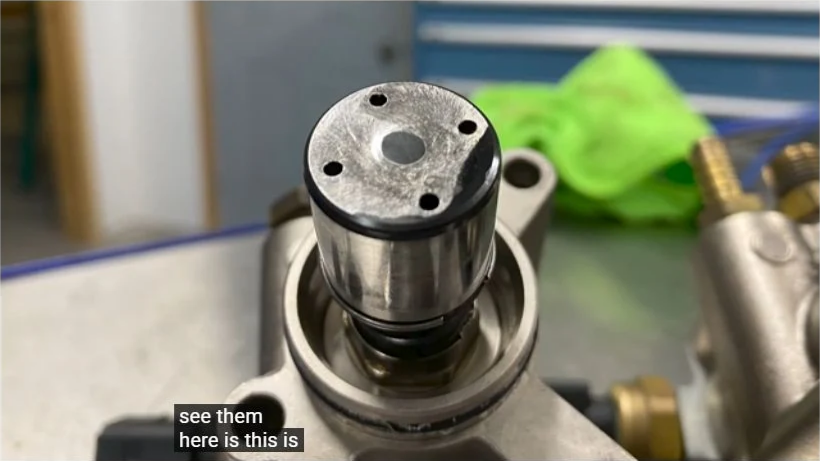 Enlarge image ↗
The marked contact face shown during the follower comparison. This is a worn part from the case, not a healthy reference or a dimensional wear test.
Watch this view in Part 2 · 10:04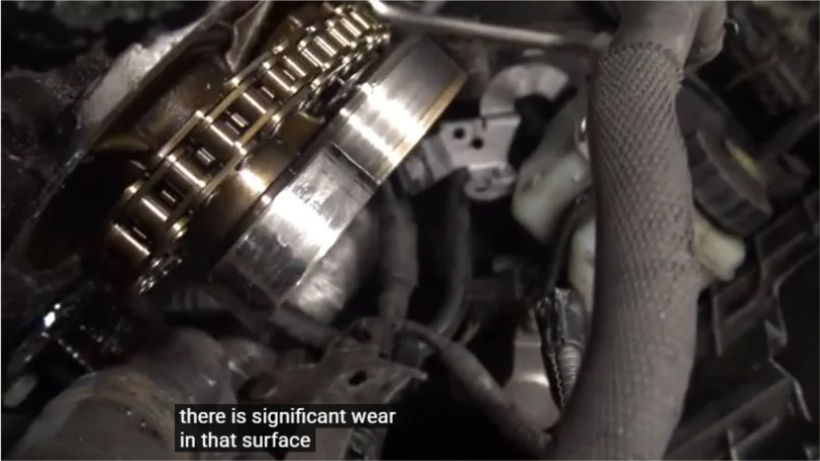 Enlarge image ↗
GoTech points out significant surface wear here. Inspect the actual parts against VW’s criteria; a photo alone cannot clear the cam or pump.
Watch this view in Part 2 · 12:39The VW inspection guidance checks the follower, cam lobe and pump-plunger tip. Wear in one location is not blanket permission to replace every component. Use its illustrated criteria and current repair instructions.
Why the camshaft repair stopped
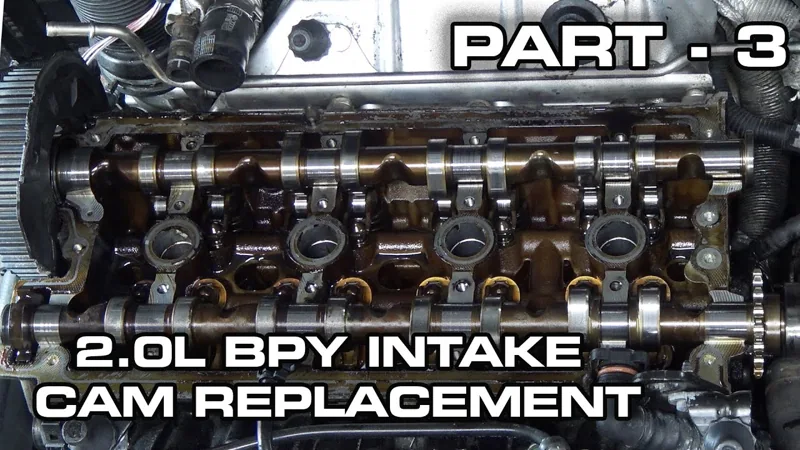
Part 3 starts as an intake-camshaft job. It does not finish as a successful camshaft replacement.
- The donor cam is rejected.
Its pump-drive lobe looks useful, but its journals are scored. GoTech orders a replacement cam and follower instead of installing that donor part.
- More damage appears during disassembly.
The presenter reports metal debris around the tensioner and scoring on camshaft and bearing surfaces. That is a different repair decision from an isolated worn pump-drive lobe.
- The plan changes.
GoTech stops the cam-only repair and arranges to return the used engine to its supplier. The series moves to another replacement engine. The supplier’s agreement is specific to this case, not a warranty promise for other owners.
The cause and full extent of the internal damage are not established here. The guide does not turn the presenter’s suspicions into a proven oiling failure or a diagnosis of the lower engine.
Did the repair fix the pressure problem?
The second replacement engine arrives with its own pump, turbo and other components. On the final drive, GoTech shows a much smaller requested-versus-actual pressure deviation and reports that the car is running well.
It improved in the demonstrated drive. GoTech reports about 45 miles of driving by the wrap-up. The assembly change included multiple components, so the result cannot isolate one failed part.
▶ Road-test data after the engine change Part 4 · 4:22▶ Why the scope comparison is not a simple verdict Part 4 · 10:38▶ Driving result and the remaining monitor checks Part 4 · 13:38Case data: keep the conditions with the numbers
| Check | What GoTech found | How to read it |
|---|---|---|
| Rail-pressure deviation | Before: excessive deviation still present with the used pump. After: about 56.3 psi peak deviation on the final graph. Part 4 · 4:22 | That is the difference between requested and actual pressure, not rail pressure itself. Final load and RPM were not recorded, so this is not a matched-condition test. |
| Warm-idle pump control | Earlier capture: about 4.73 ms / 8.26 A. Replacement assembly: about 4.67 ms / 6.88 A. Part 4 · 5:21 | Similar on-time with lower current in the shown captures. Do not use these case values as manufacturer pass/fail specifications. |
The resistance measurements also used different temperatures. The replacement engine’s follower was not removed and inspected. Neither comparison closes those questions.
Before calling your repair done
- Repeat the original complaint conditions safely and save the relevant data.
- Recheck the complete fault list and required fuel-system checks.
- Complete the service-prescribed checks for the work actually performed.
- Check readiness separately if an emissions test is needed.
The series reports a successful short-term result. Completed readiness monitors, an emissions pass and long-term durability are not documented.
Taking P2293 to a shop? Start with these questions
Bring the code, the conditions and the history.
Explain when the problem happens, any recent engine or fuel-system work, and which parts have already been tried. Bring saved data if you have it. You do not need to choose the repair before the diagnosis.
- Does actual rail pressure miss the requested value when my complaint happens?
- Has the low-pressure side been checked under the relevant conditions?
- Does the applicable inspection show follower, cam-lobe or pump-plunger damage?
- If more damage is found, what changes in the estimate and repair plan?
- What data and final checks will show that the original problem is resolved?
A code scan and saved observations are useful DIY starting points. Opening this fuel system or disturbing engine timing requires the right equipment, procedures and experience.
A few questions this case can answer
Does P2293 mean the high-pressure pump is bad?
Not by itself. The pump substitution in this case did not fix the complaint. The supply checks and mechanical inspection mattered to the next decision.
Will a new cam follower fix this problem?
This series does not establish a follower-only repair. Wear needs to be assessed with the cam lobe and pump tip before choosing the work. Replacing a follower does not restore a damaged surface that drives it.
Does P2293 mean I need another engine?
No. This Jetta’s repair changed after disassembly revealed more damage. The code alone is not evidence that an engine replacement is needed.
Is this a complete BPY camshaft replacement guide?
No. The planned cam repair was abandoned. The series shows disassembly and a changed decision; it does not document a completed camshaft installation and verification.
Does this apply to every VW 2.0T?
No. The demonstrated car has a BPY engine. VW bulletin 15-16-01 lists BPY Jetta (A5) models for 2005–2007 and BPY Eos, GTI, Passat and Passat Wagon models for 2006–2007. Confirm engine code and current service information; a model name alone is not enough.
Supplemental source: Volkswagen bulletin 15-16-01 / 2015153, March 9, 2016. It supports the BPY scope and inspection context, not a current warranty or recall claim.
Watch the four-part GoTech case
Every timestamp above plays here. Use “Back to where you were” to return to the check you were reading.
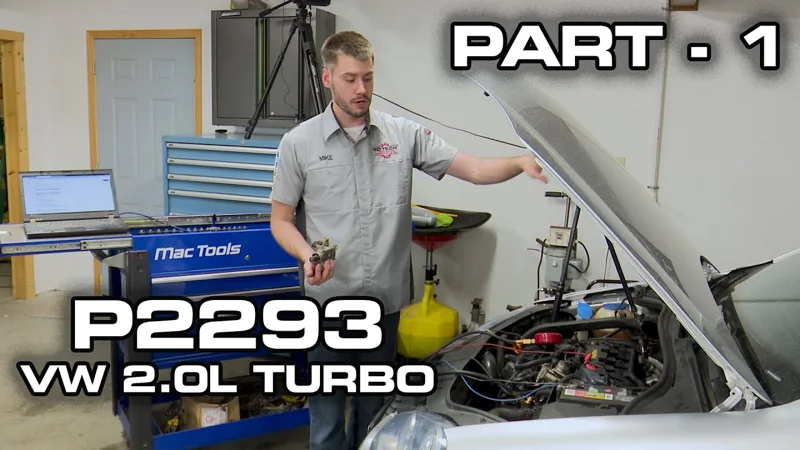
Video loads only when you choose to play.
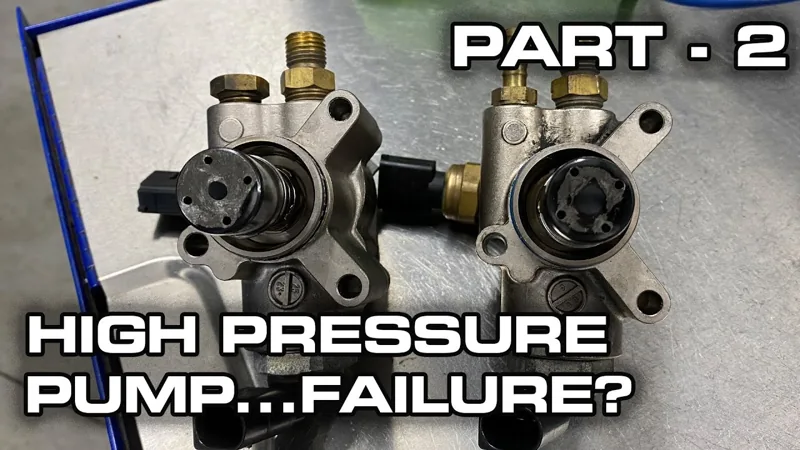
Video loads only when you choose to play.
Video loads only when you choose to play.
Video loads only when you choose to play.
What this guide covers
A diagnostic case companion for GoTech’s 2006 BPY Jetta, not a complete high-pressure fuel-system, camshaft or engine-replacement procedure. It does not establish a universal P2293 fix, pump-current specification or long-term repair result. Use current service information for the exact engine and vehicle.
Written by GoTech from the original videos. The linked source moments let you check the explanation against the demonstration.