
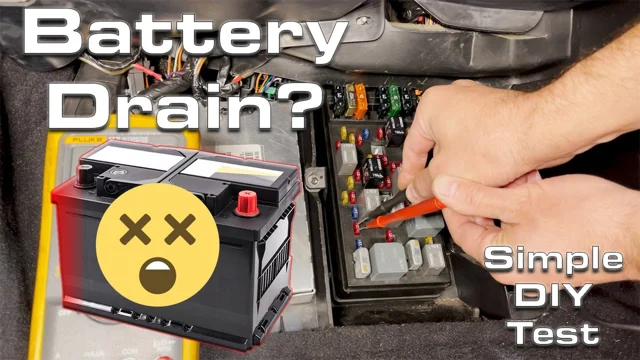
Video loads only when you choose to play.
Parasitic Battery Drain test Procedure
Ensure battery is fully charged and the vehicle charging system is operating properly – ↗ 0:09
Prep vehicle for test by opening doors, trunk, hood, etc and trip the latches - ↗ 1:55
Verify parasitic draw is present by placing multimeter set to 10 amperage setting in between the negative battery terminal and the negative battery cable. This forces any current being drawn from the battery through the multimeter. - ↗ 1:18
Allow the vehicles systems to enter sleep mode. This can take anywhere from two minutes to over one hour on some vehicles
Check amperage reading on multimeter - ↗ 2:38
Using a multimeter set to millivolts begin looking for voltage across the fuses. Anything greater than 0.000 is an indication of current flow - ↗ 6:42
Use wiring schematic to determine what’s in the circuit that ties to fuse identified above - ↗ 8:03
Fix or repair faulty component that is causing unintended amperage draw
Re-inspect parasitic draw value ensuring its under 50 mA - ↗ 8:30
Source and limits
Original GoTech article, 2022-06-01. Illustrations retain their source descriptions; their technical meaning has not been independently reviewed. Videos and articles remain separate evidence.
Existing tool links may earn GoTech a commission. Commercial descriptions remain attributed to the original article.
Article provenance
Source mdx-09a93423424f0e52f86e
SHA-256 ab63a2edcf1941f99a85d7100a6a27fb80fd59a80b38f1fd8d010ed27648a5f5
Keep the evidence in view.
Ask currently covers reviewed CAN and wiring concepts. Coverage for this article’s topic may be limited.
See what Ask covers · Explore learning paths